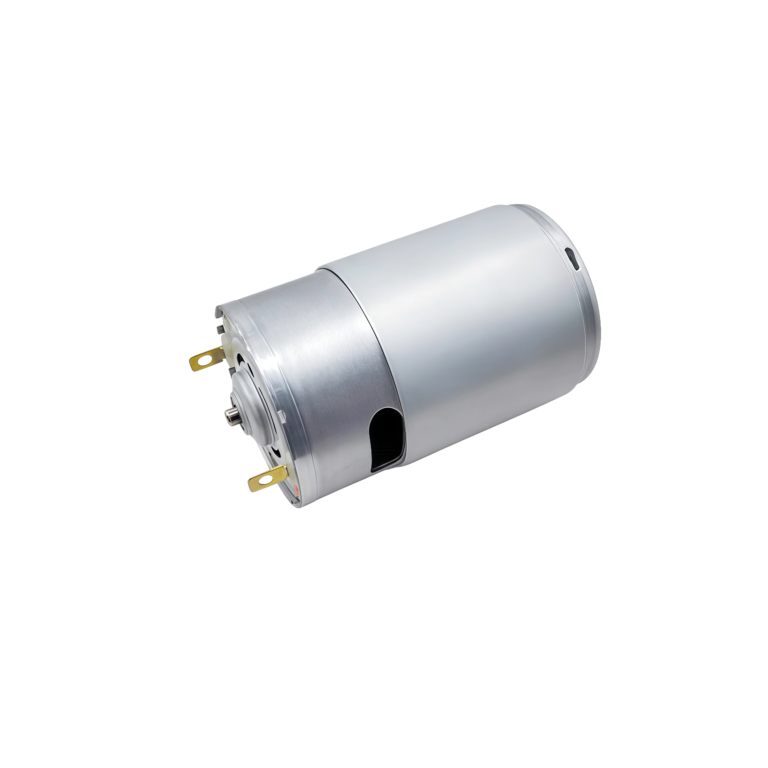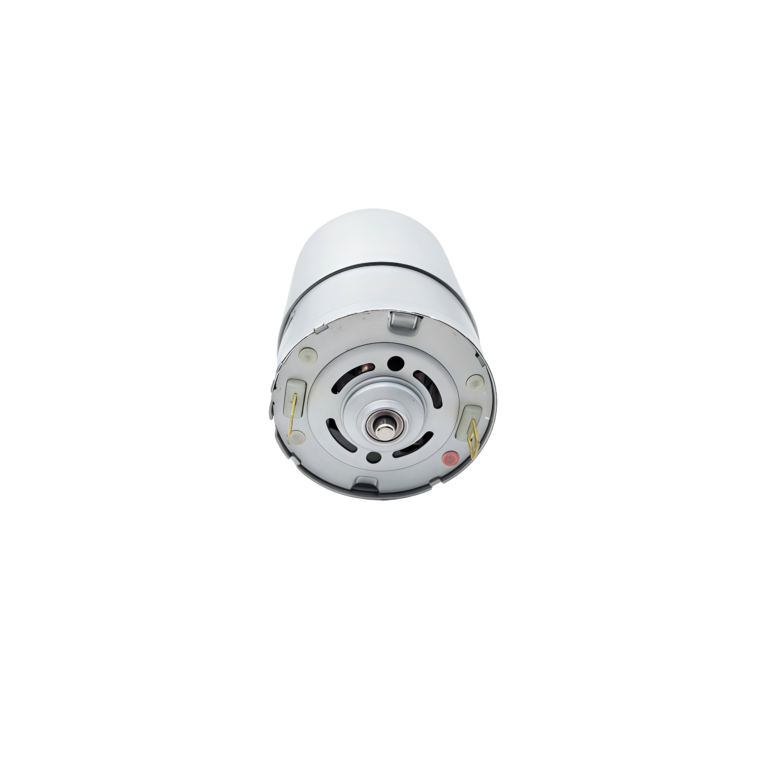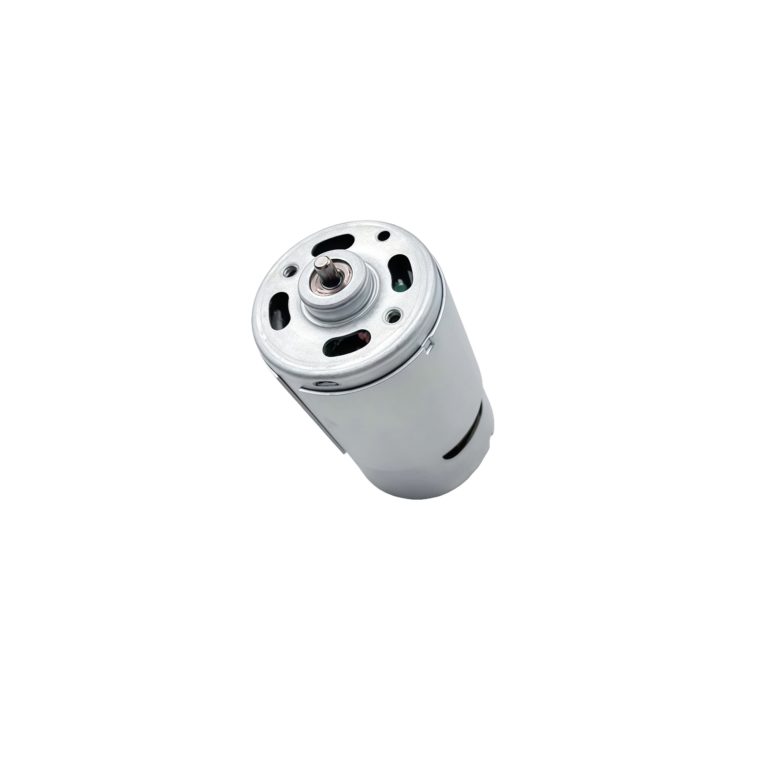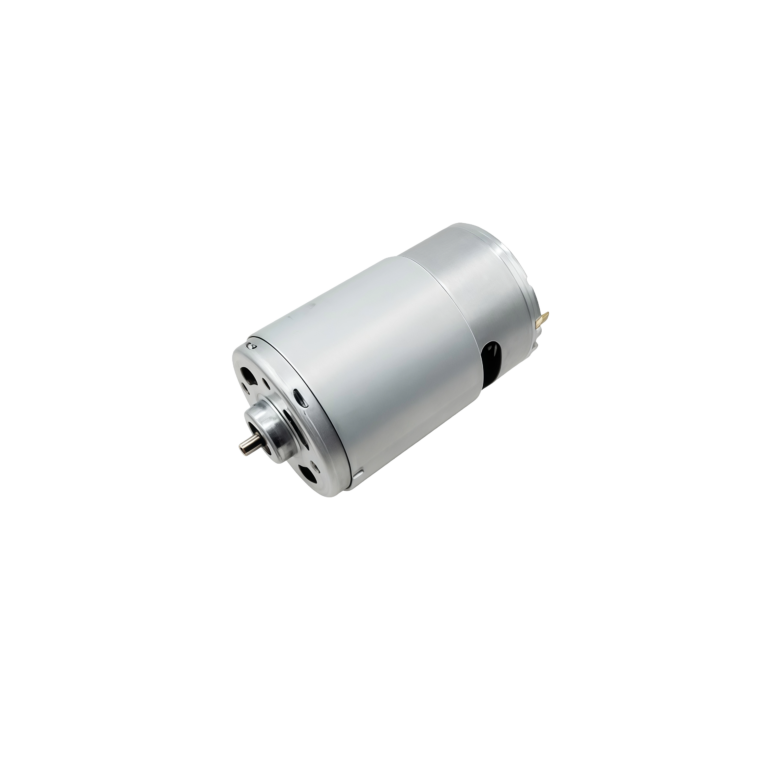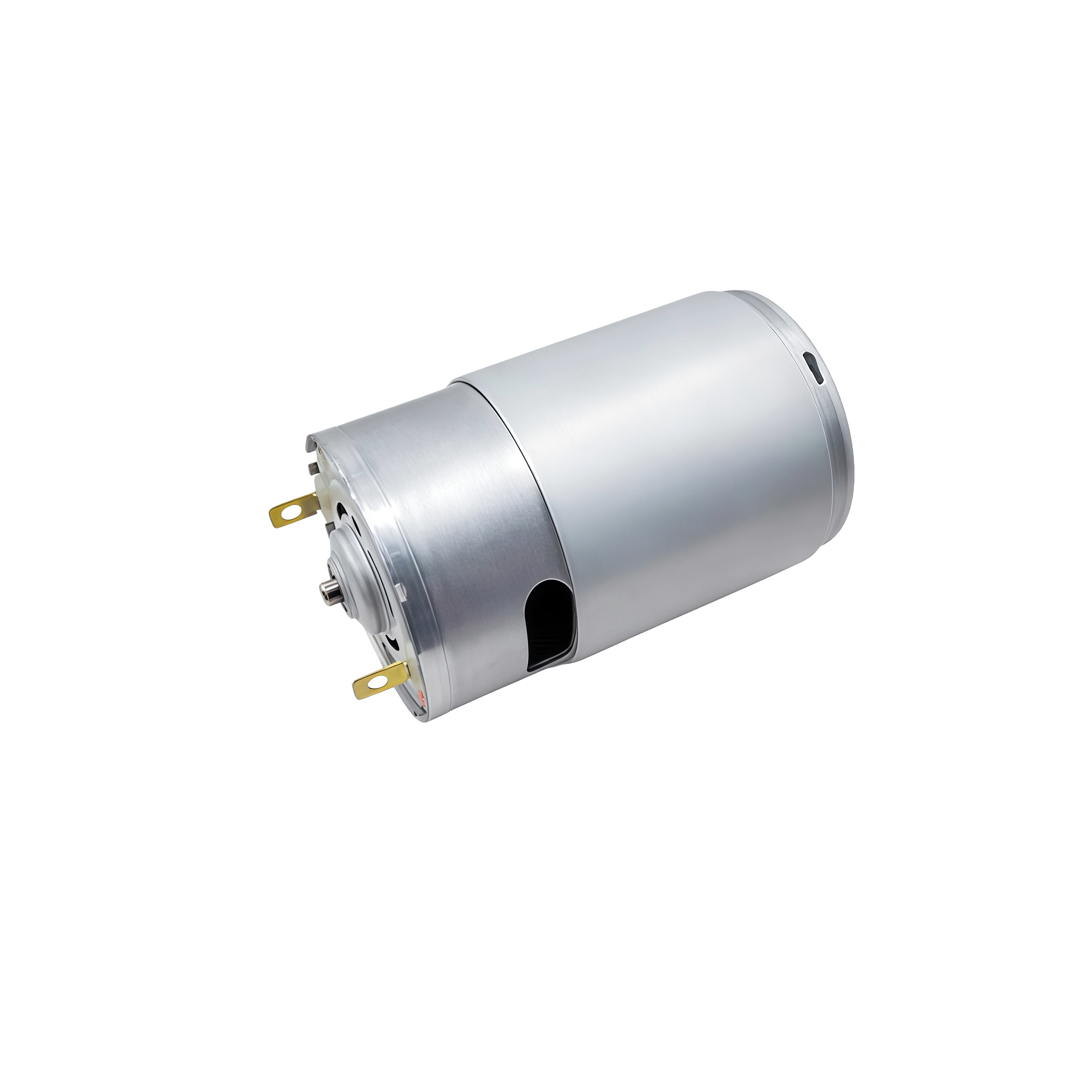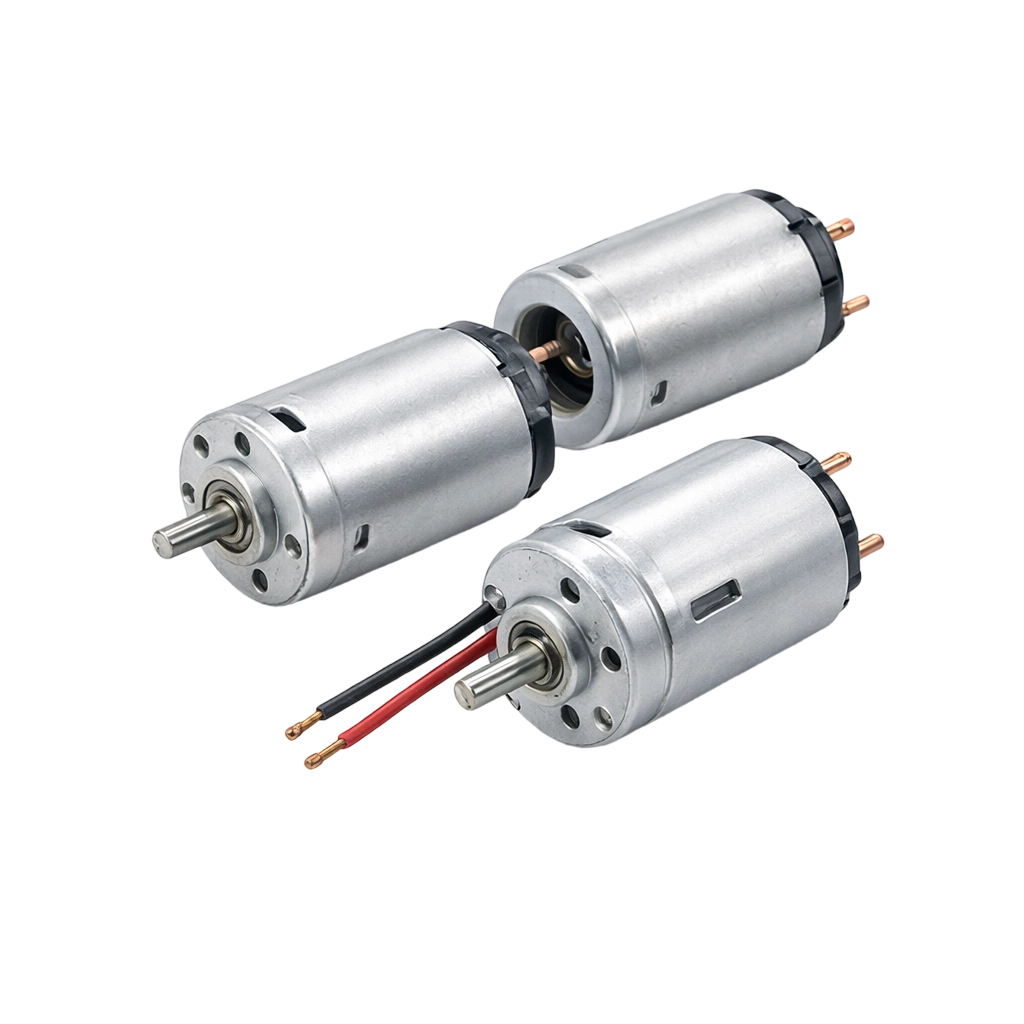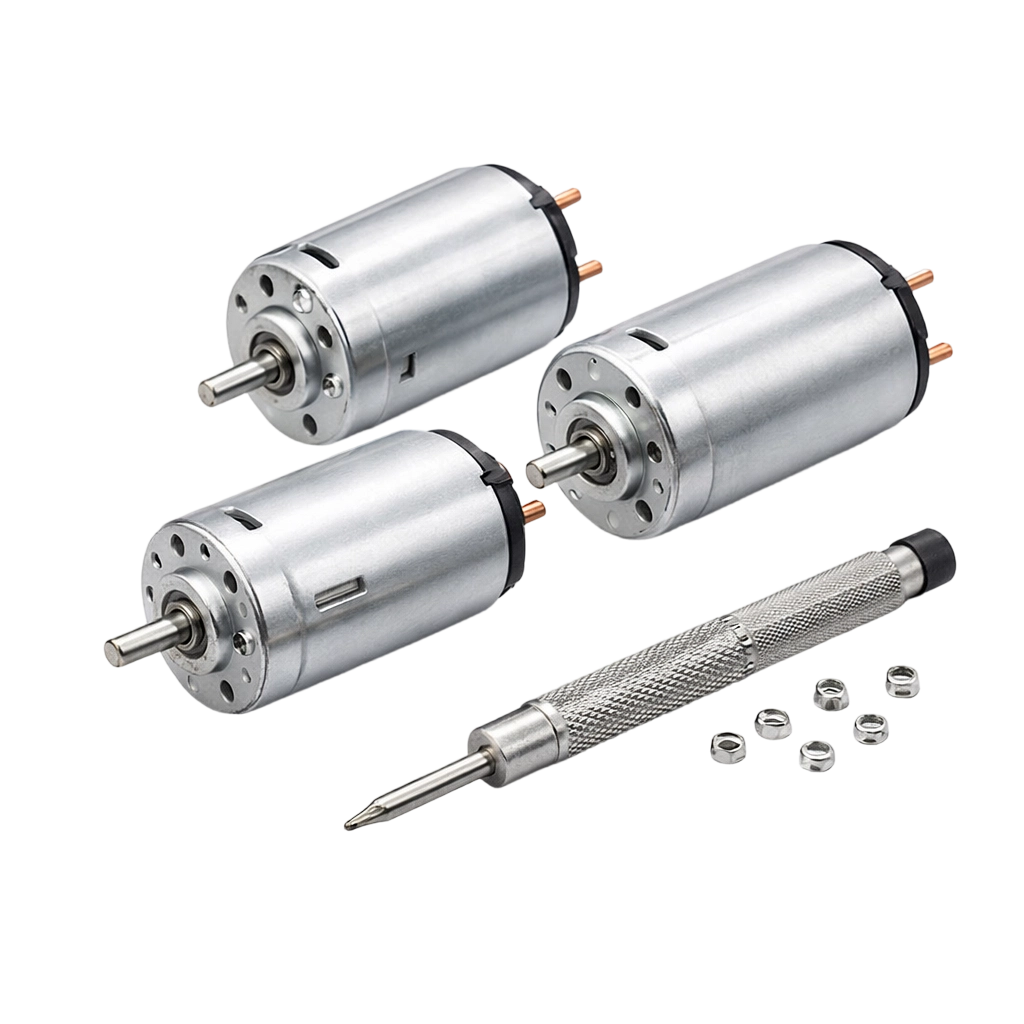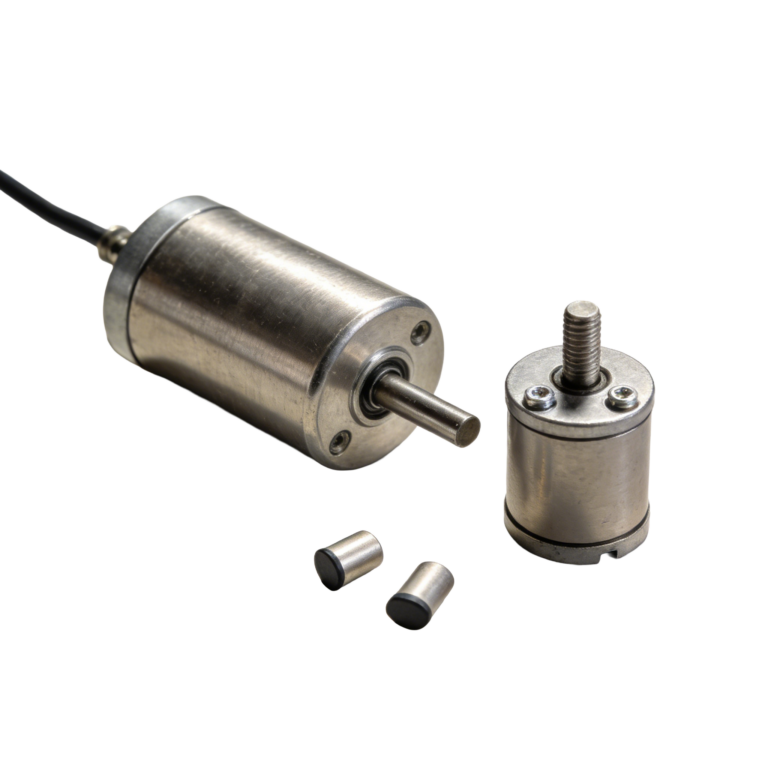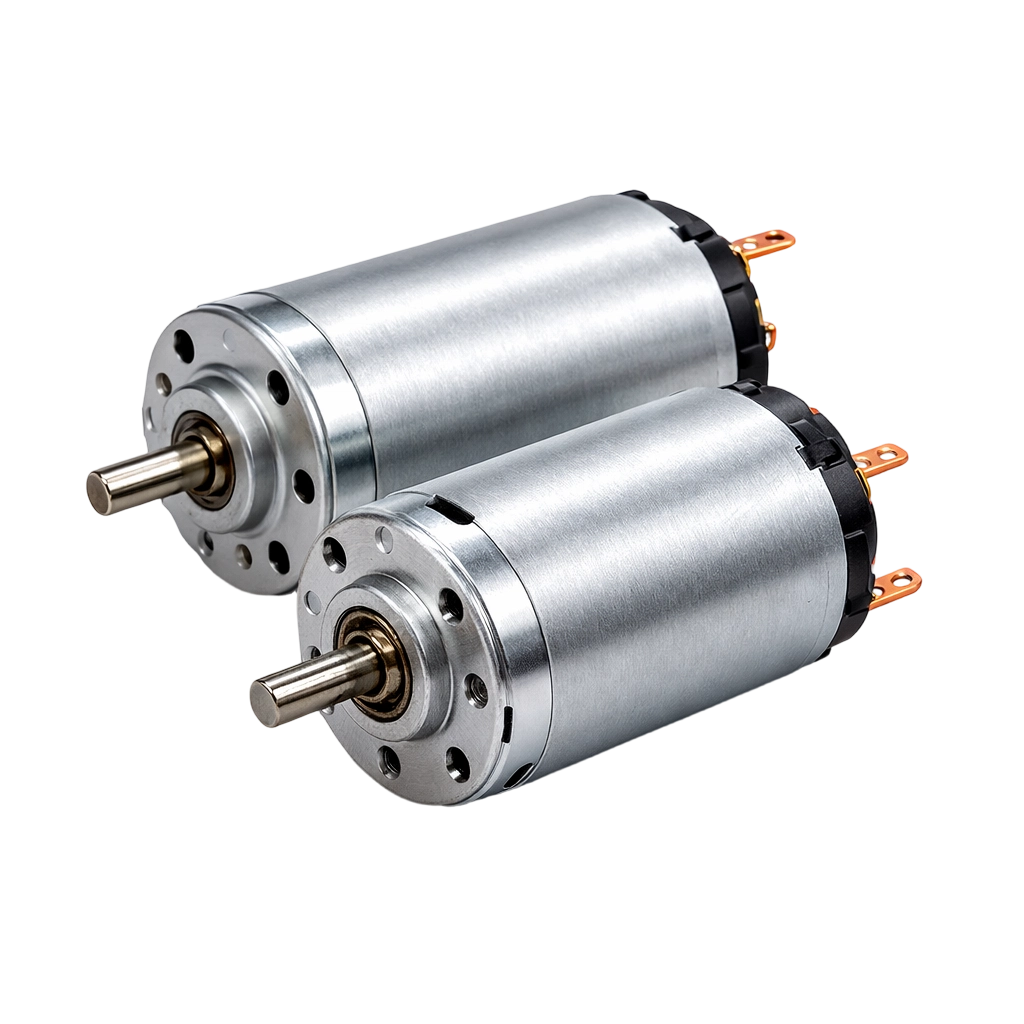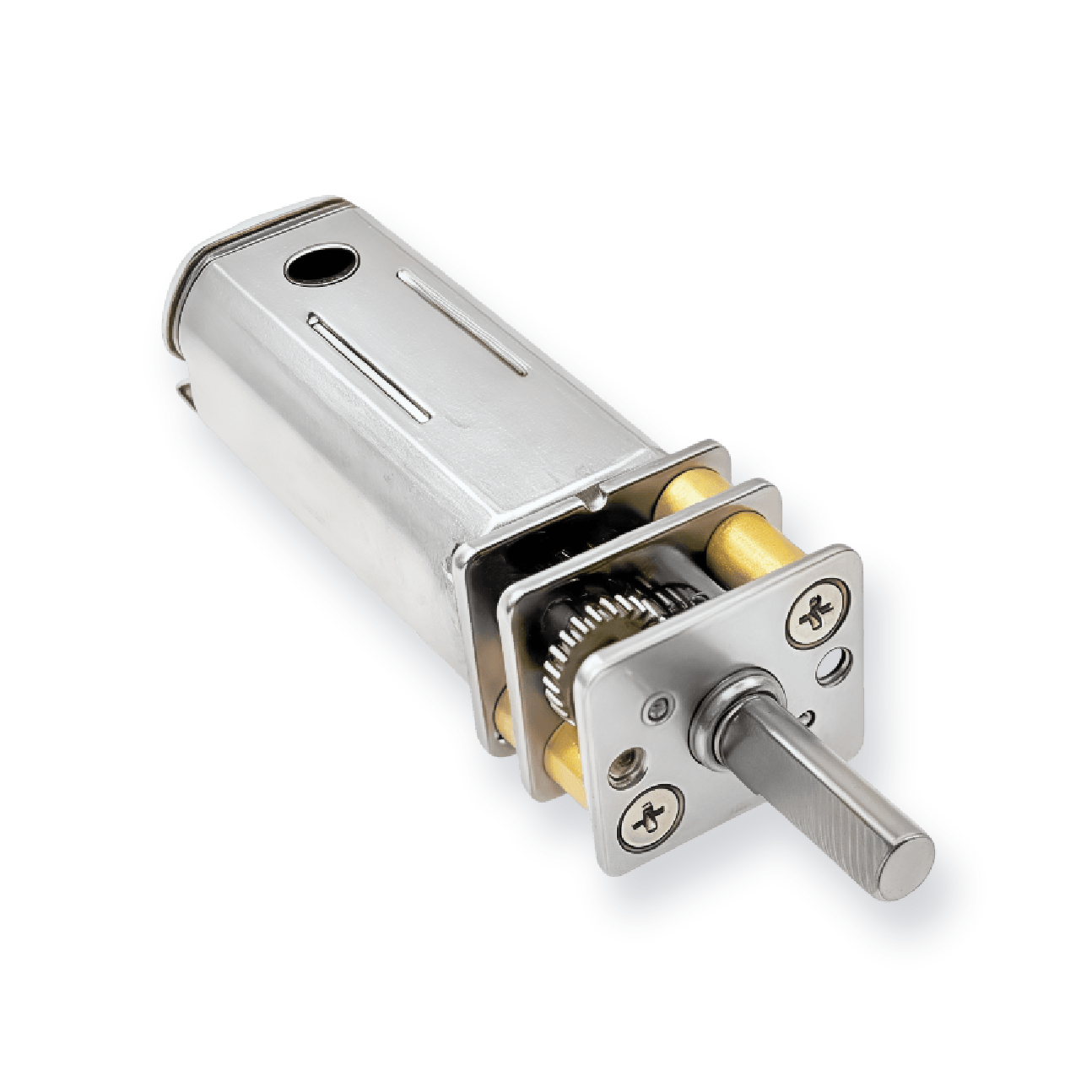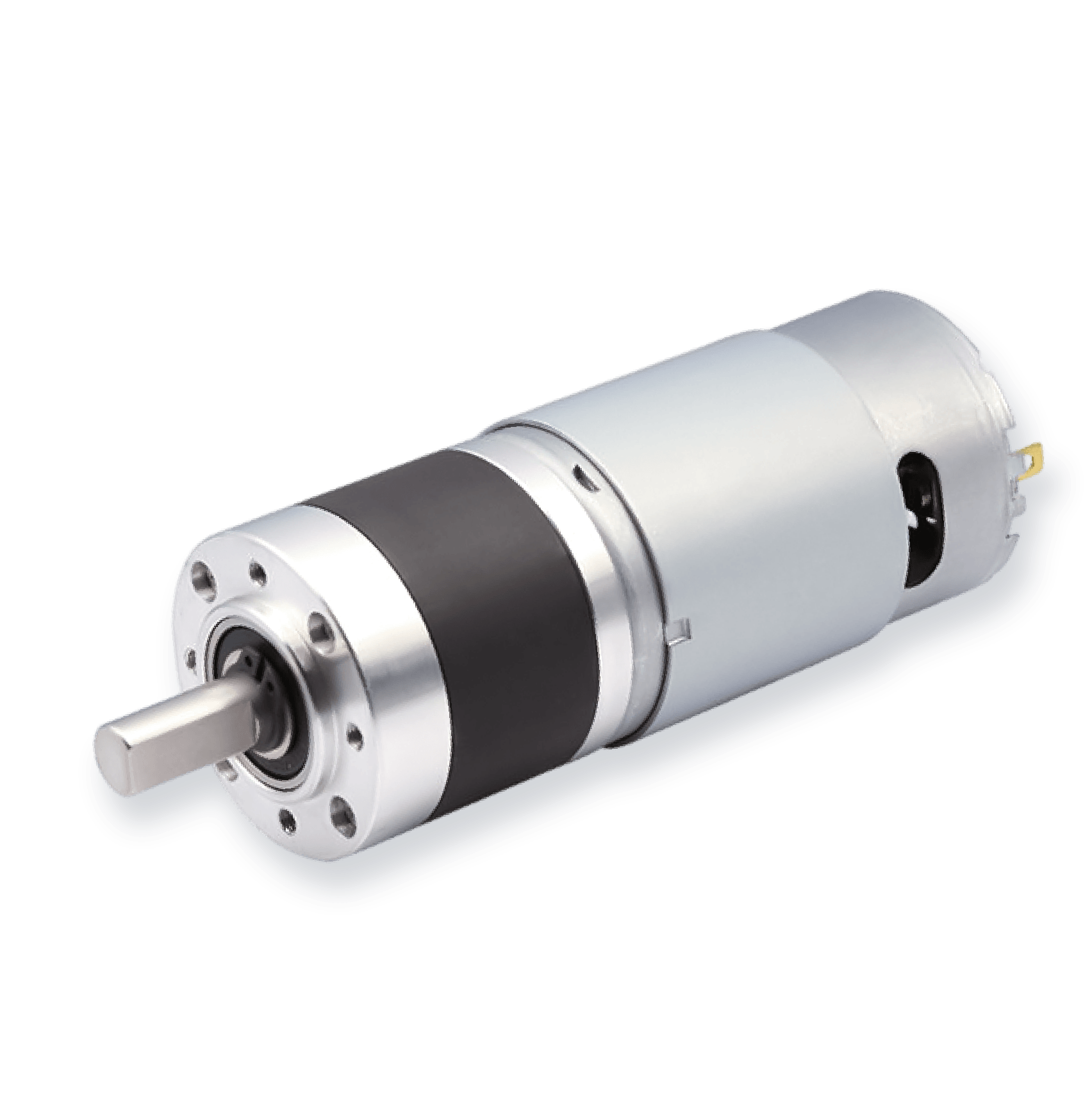
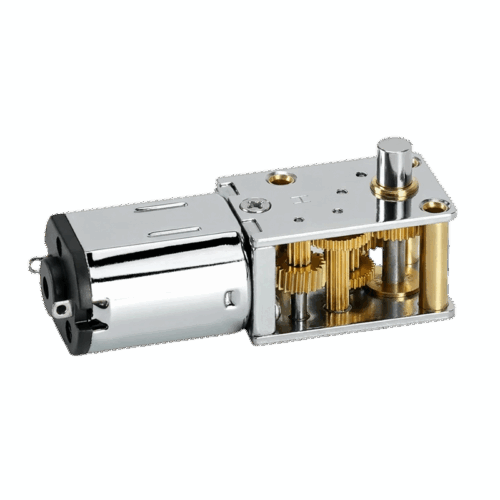
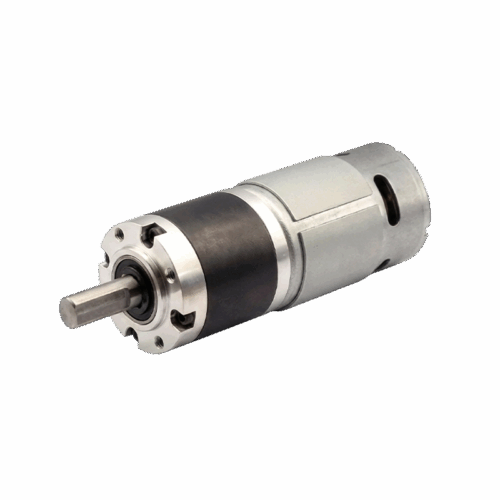
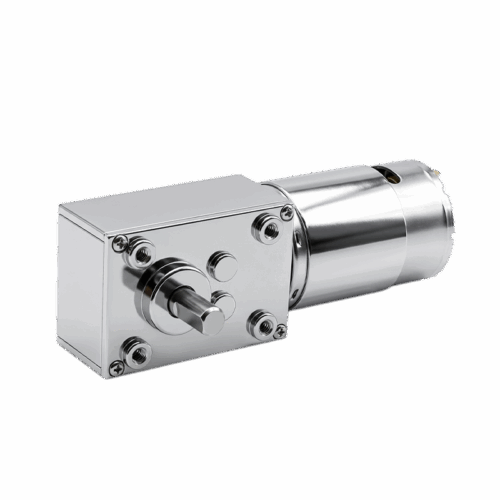
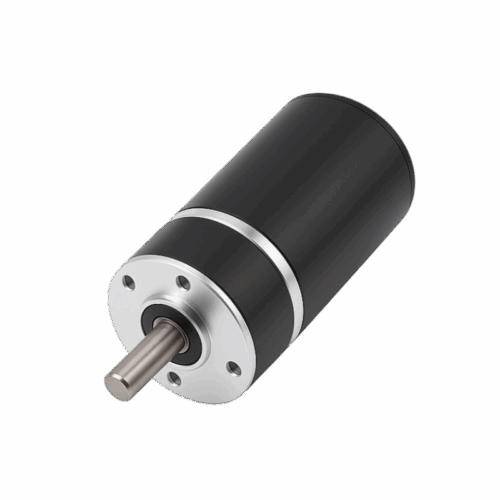
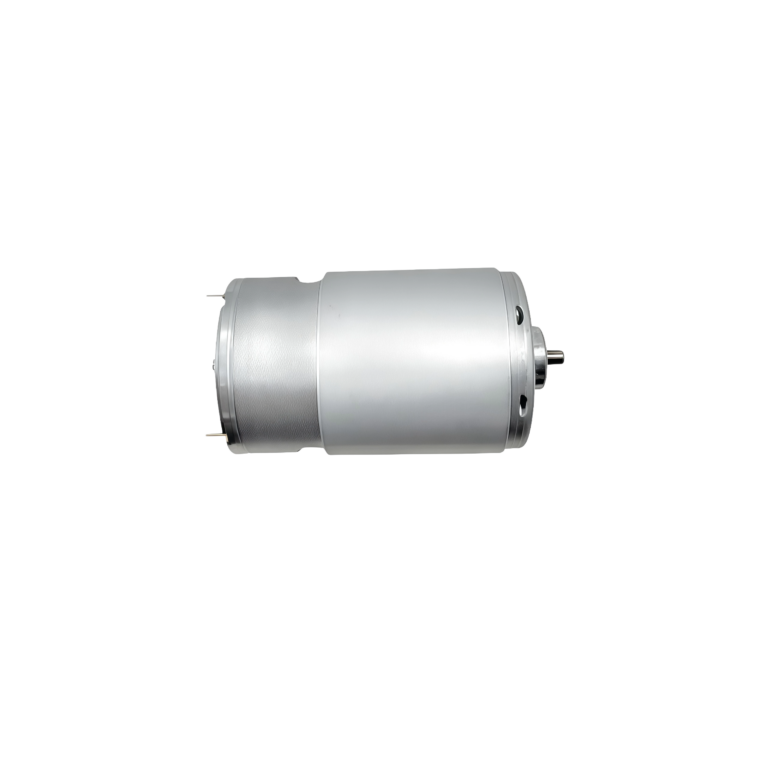
36mm Diameter 555 Brushed DC Motor

This 555 brushed DC motor is designed for 3–24V systems where you choose between 12V and 24V windings, then size driver current and torque margins using a full curve table from no-load through max efficiency, max output, and stall.

Get a Quote
  • 36mm Diameter 555 Brushed DC Motor Featured Image
Specs

Key Features

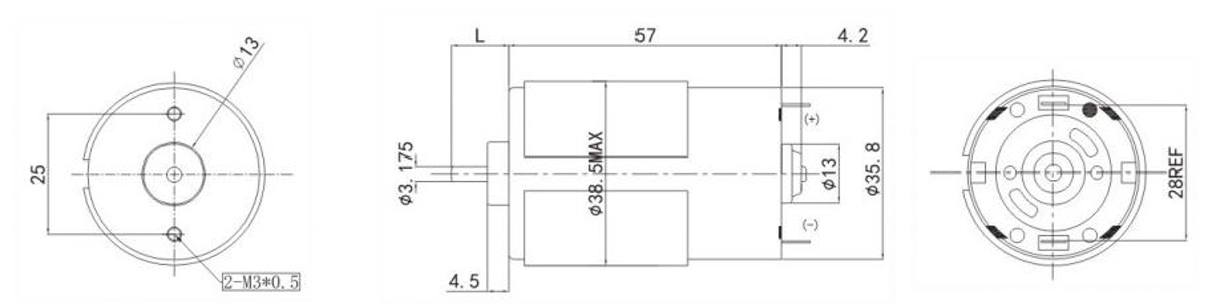
This model is a 555 brushed DC motor platform defined by its Φ35.8×L57 envelope and a complete operating-point table, making selection straightforward when you must plan speed, current rise, and torque growth toward stall.

  • Fixed Φ35.8×L57 envelope supports standard 555 motor packaging
  • Two winding options (12V / 24V) separate voltage architecture and current behavior clearly
  • Full operating-point table (No Load / Max Efficiency / Max Output / Stall) supports selection by real working region
  • Stall current and stall torque define the boundary for jam events and protection strategy
technical Specs

Motors Specifications

Model No Load Max Efficiency Max Output Stall
Voltage (V) Current (A) Speed (rpm) Current (A) Speed (rpm) Torque (g.cm) Current (A) Speed (rpm) Torque (g.cm) Current (A) Torque (g.cm)
SLW-R555-3550 12 0.167 4546 1.136 3965 244.5 3.957 2273 955.6 7.748 1911.2
SLW-R555-21135 24 0.068 4051 0.431 3499 194.8 1.402 2026 715.3 2.735 1430.6

For additional customization or reference configurations, please feel free to contact us.

Why Choose us

SLW Motor Highlights

  • Full Curve Table Enables Real Working-Point Selection

    You can size around max efficiency for steady duty or check max output for short bursts, instead of selecting by no-load RPM alone.

  • 12V vs 24V Windings Change Current Stress

    Current levels across the curve differ strongly by winding, which directly affects driver sizing, wiring gauge, and thermal strategy.

  • Torque Growth Toward Stall Sets Mechanical Risk

    Stall torque defines the boundary condition for jams and hard stops, which drives coupling choice and stop durability.

  • Efficiency Point Helps Predict Continuous Heating

    Max-efficiency current provides a practical reference for continuous operation heating compared with max output and stall.

Custom

Beyond the Standard: Performance Customized

  • 01
    Winding Choice by Rail Voltage and Peak Current Ceiling
    We start from your supply and allowable peak current, then select the winding so you avoid forcing fit through overvoltage or aggressive PWM.
  • 02
    Working-Point Lock-In at Max Efficiency
    We anchor selection around your steady operating region first, then validate that you aren’t operating near stall in normal cycles.
  • 03
    Current-Limit Strategy for Max Output and Stall
    We define current limiting and recovery logic early because current rises rapidly from efficiency toward max output and stall.
  • 04
    Torque Boundary Planning for Coupling and Hard Stops
    We treat stall torque as the boundary condition and confirm couplings, geartrains, and end-stops can tolerate worst-case torque.
  • 05
    Variant Strategy Using One Φ35.8×L57 Platform
    If you plan SKUs, we keep the 555 mechanical platform constant and differentiate variants mainly by winding and operating point.
  • Winding Choice by Rail Voltage and Peak Current Ceiling
  • Working-Point Lock-In at Max Efficiency
  • Current-Limit Strategy for Max Output and Stall
  • Torque Boundary Planning for Coupling and Hard Stops
  • Variant Strategy Using One Φ35.8×L57 Platform

Custom Now

FAQ

Frequently Asked Questions

If you share your available space and the driven load type, we can help narrow the most suitable configuration quickly.

How do I choose between the 12V and 24V versions quickly?
Match your supply voltage first, compare max-efficiency speed/torque to your steady operating point, then confirm stall current fits your driver limit.
Which section should I use for normal operation planning?
Use Max Efficiency for steady current and heat estimation, and use Stall only as a boundary for fault events.
Why does stall matter if I avoid stalling in normal use?
Stall defines what happens during jams and hard stops, which drives driver protection and mechanical durability.
What should I share so you can shortlist the right option?
Share your supply voltage, target RPM, load torque estimate, duty cycle, and driver current limit.
Is it suitable for repeat production across variants?
Yes. You can standardize the Φ35.8×L57 platform and differentiate variants mainly by winding and operating point.
Get Started

Accelerate Your Project with Precision Motors